
Quality & standards
Tested quality, international certifications – what underpins every SLS profile
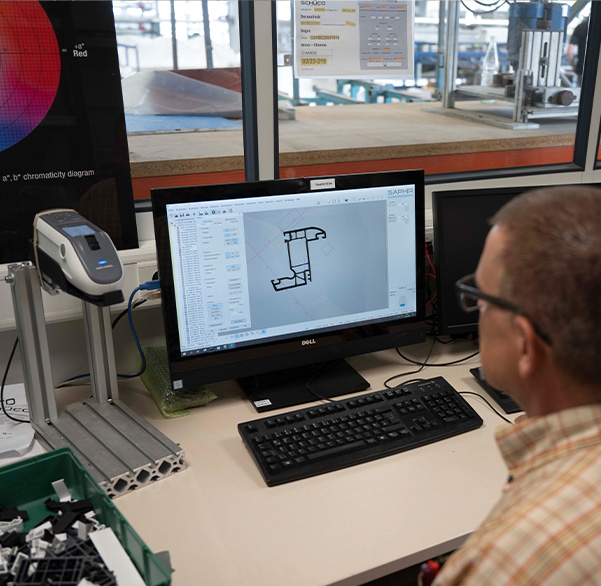
Plastic profiles have to perform more functions than may be apparent at first glance. Depending on the application, they contribute to building airtightness, fire safety, structural stability or weather-resistant exterior performance. SLS ensures that these requirements are met through a comprehensive system of in-process inspections, international certifications and a certified management system – giving customers a reliable basis on which to depend.
International certifications: market access through verified compliance
SLS products are certified in accordance with recognised European and international standards. These include CSTB and LNE (France), VDE (Germany), KOMO (Netherlands) and ATG (Belgium). Each of these certifications follows its own system: ATG is the Belgian quality mark for the construction sector, while the QB mark within the CSTB system stands for Qualité pour le Bâtiment – quality for construction.
At company level, SLS is certified to ISO 9001. This means that processes, responsibilities and quality standards are systematically documented and regularly audited by external bodies. For customers, this provides reliable evidence that the product is backed by a transparent and traceable quality management organisation.
Inspection interval: every two hours during production
At SLS, quality control does not take place at the end of the line, but throughout ongoing production. Every two hours, the responsible production operators inspect the profiles in accordance with defined inspection instructions. In parallel, the quality assurance department carries out its own tests in accordance with DIN EN 477, 478, 479 and 527 at the prescribed intervals.
This two-stage inspection – carried out independently by production operators and the quality assurance department – is a deliberate approach: it increases the likelihood of detecting deviations at an early stage before larger batches are affected.
What is tested: falling-mass impact and tensile testing
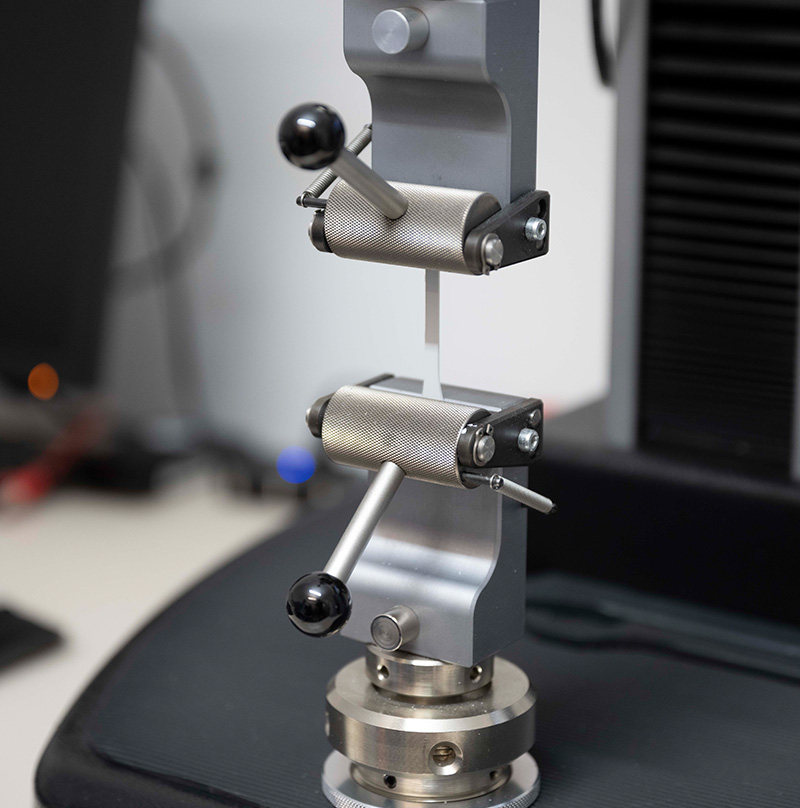
Two key test methods are representative of the range of inspections carried out at SLS. The falling-mass impact test in accordance with DIN EN 477 assesses resistance to impact at low temperatures: a falling striker impacts the profile under defined conditions, and the profile must not break or crack. The tensile test in accordance with DIN EN 527 determines mechanical properties such as tensile strength, yield stress, modulus of elasticity and elongation. These values are critical when profiles are installed in structures exposed to mechanical loads.
Traceability: every profile is individually marked
To ensure that test results remain traceable, all SLS profiles are individually marked. Information on the material, production date and quality mark is applied directly to the profile. This enables complete traceability between the profile and the corresponding inspection record – both internally and for customers and certification bodies.

Sustainability as a quality criterion
Environmental management system certified to ISO 14001. Membership of the Rewindo system for returning window profiles up to 40 years old to the recycling loop.

ISO 9001 certified
Systematically documented processes and externally audited standards provide a reliable basis for meeting all customer requirements.
At a glance: quality assurance & certifications at SLS
Product certifications
CSTB, LNE, VDE, KOMO, ATG
Company certifications
ISO 9001 (quality management), ISO 14001 (environmental management)
Inspection interval
every 2 hours during production by production operators and quality assurance
Test standards
DIN EN 477 (resistance to impact at low temperatures), DIN EN 478, 479, DIN EN 527 (tensile test)
Marking
individual to each profile – material, date, quality mark
Recycling
Rewindo member for plastic profiles recovered from old windows